Factory-direct · Anping, China

Stainless steel mesh,
engineered to spec.

Electric resistance-welded stainless steel weld mesh and woven wire screen mesh, supplied as rolls, sheets or cut-to-size panels. Aperture 3–100 mm, wire 0.7–6.0 mm, open area published per item rather than left to guesswork. Wire is 304, 316L, 310S or 2205 duplex throughout — no coating to chip, and the grade is recorded on every batch.

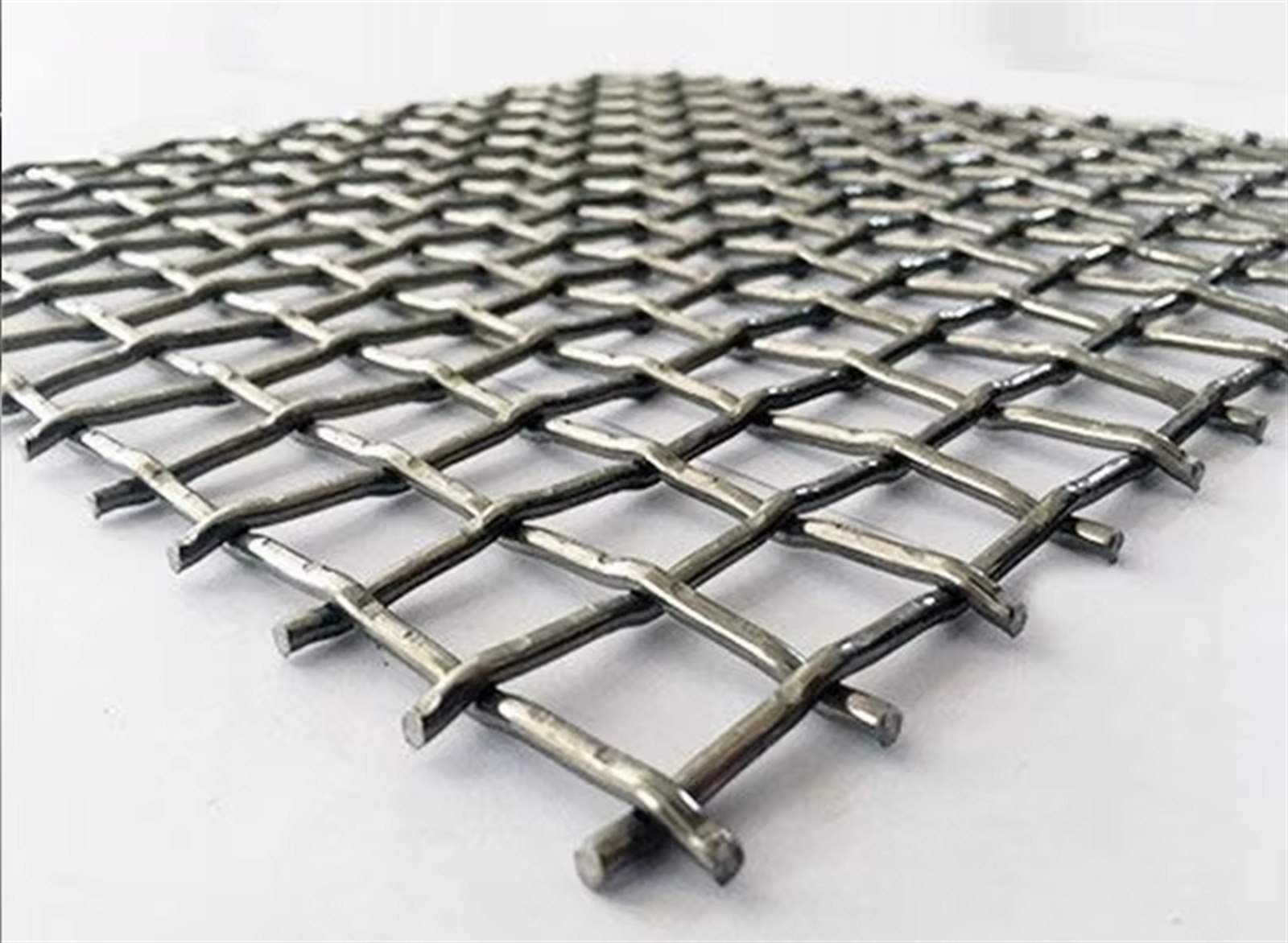
Stainless steel pre-crimped woven screen mesh, flat sheet Screen mesh · pre-crimped stainless weave
304 / 316L / 2205Stainless wire grades
0.7–6.0 mmWire diameter range
3–100 mmAperture range
CustomPanels cut to drawing
Product Range

Weld mesh & screen mesh

Two product families off the same stainless wire. What changes between them is the wire grade, the aperture and the edge — not the welding process. Panels, sheets and rolls are supply forms of the same mesh, not separate products.

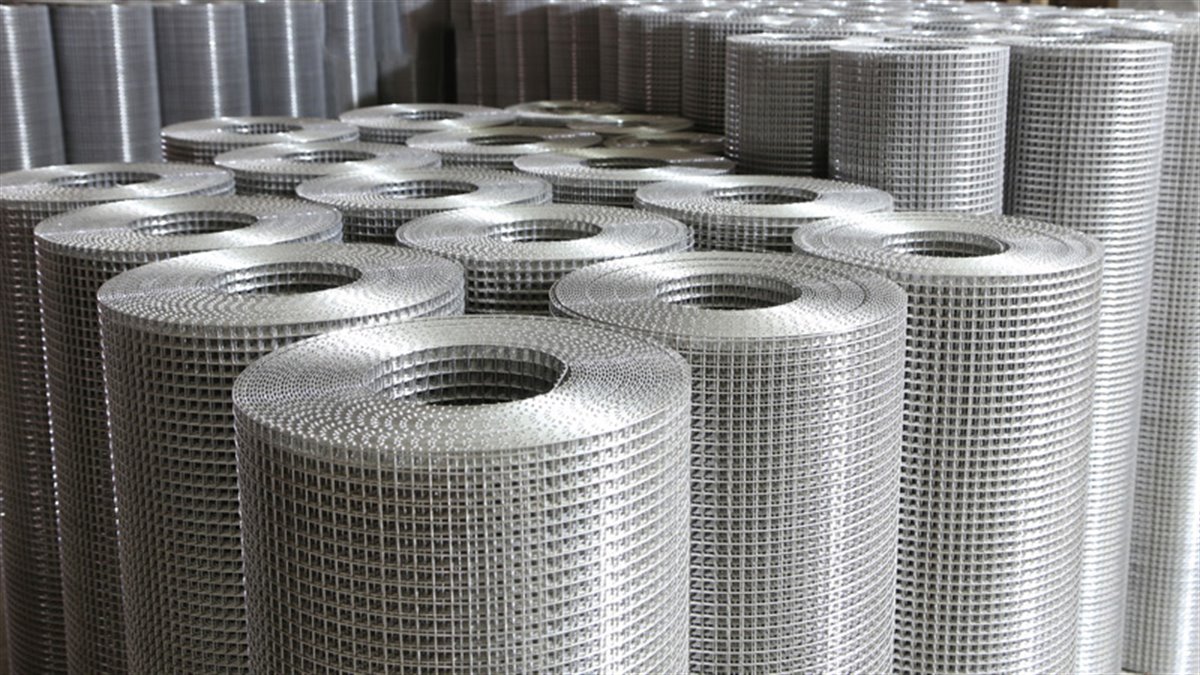
Coils of stainless steel weld mesh stacked in the warehouse

Weld Mesh

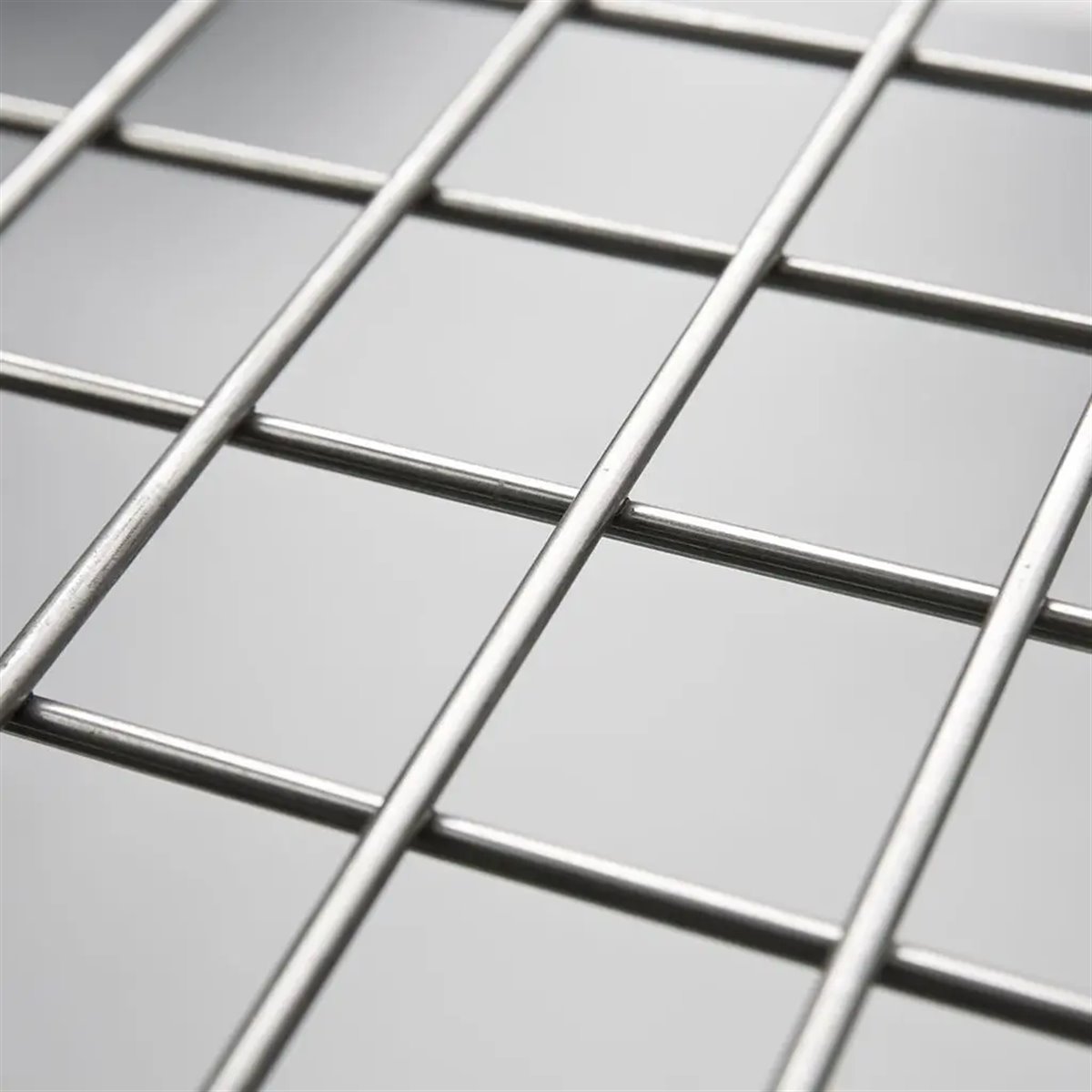
Electric resistance-welded at every intersection from stainless wire, flush-cut edges, no coating anywhere. Aperture 12.7–101.6 mm, wire 0.7–5.0 mm, open area 83–94%. For architectural infill, machine guards, cage and rack panels, filtration support and coastal barriers.

  • Aperture 12.7–101.6 mm
  • Wire 0.7–5.0 mm
  • 304 · 316L · 310S
  • Open area 83–94%
Applications
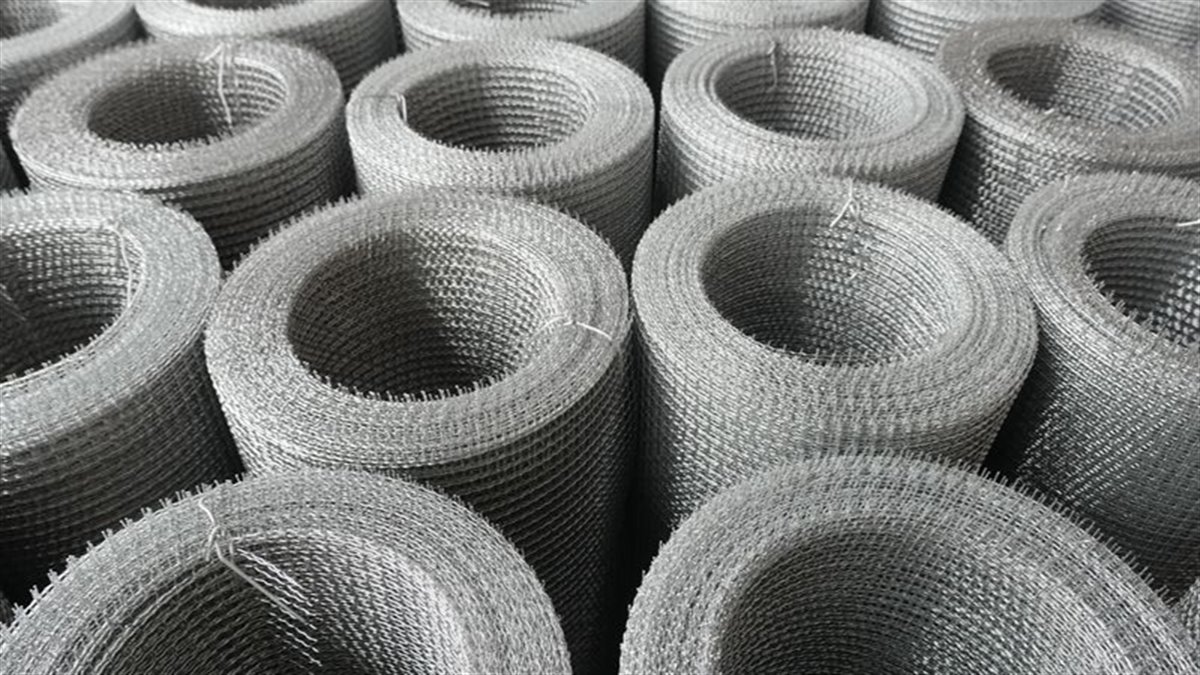
Coils of stainless steel woven screen mesh stacked in the warehouse

Screen Mesh

Woven and pre-crimped stainless wire cloth, one spec sheet for three jobs: filter packs and strainers in petrochemical, polymer and water duty; guards and enclosures in heavy industry; sizing and dewatering sections on vibrating decks. Aperture 3–100 mm, open area 40–83%, hook or tension edges fitted at our works.

  • Plain weave / lock crimp
  • Aperture 3–100 mm
  • Filtration · guards · decks
  • 304 · 316L · 2205
Applications

Supply forms

Same mesh — four ways it leaves the factory
Rolls

Width 0.6–2.1 m, length 15–90 m. For contractors who cut on site and want length without panel waste.

Flat sheets

1 × 2 m, 1.5 × 3 m, 2 × 3 m, or cut to module. Stacked and strapped for container loading.

Cut-to-size panels

Aperture and outside dimensions per drawing, flush-cut or framed edge, ±2 mm on overall panel size.

Framed & folded

Welded frames, bends, brackets or mounting tabs, then finished to order — arrives ready to install.

Specifications

Three numbers define the mesh

Aperture, wire diameter and mesh count — any two of them determine the third. Give us all three and the quote needs no clarification. Open area and weight per square metre follow from the wire-to-aperture ratio.

Aperture (clear opening)

The gap between wires, in mm or inch. This is what actually decides whether a particle passes — not the mesh count. State it first.

Wire diameter

Sets strength and wear life. Quote it in mm; a heavier wire for the same aperture reduces open area, which is the trade-off to settle before the order.

Panel size & edge

Roll or flat sheet, cut-to-size panel, flush edge, framed, folded, hook or tension edge. The edge detail is what makes a panel fit the deck or post.

Table 1 — Weld mesh: aperture, wire diameter, open area (stainless)
Aperture mm / inchWire dia mmOpen areaWeight kg/m²Typical use
12.7 / 1/2"0.7 – 1.283 – 90%≈0.5 – 1.3Guards, small cages, filtration support
19.1 / 3/4"0.8 – 1.586 – 92%≈0.4 – 1.4Partitions, poultry runs, rack infill
25.4 / 1"0.9 – 2.185 – 93%≈0.4 – 2.0Architectural infill, shelving, machine guards
25.4 × 50.8 / 1" × 2"1.5 – 2.587 – 92%≈0.8 – 2.1Security screens, site barriers, coastal fencing
50.8 / 2"1.7 – 3.089 – 94%≈0.7 – 2.1Heavy guards, food-plant barriers, gabion
50.8 × 101.6 / 2" × 4"2.0 – 3.491 – 94%≈0.7 – 2.0Livestock, structural infill
76.2 / 3"2.6 – 4.589 – 94%≈1.1 – 3.2Machine guards, heavy enclosures
101.6 / 4"3.0 – 5.091 – 94%≈1.1 – 3.0Rack decking, coarse guards
Table 2 — Screen mesh: aperture vs open area
Aperture mmWire dia mmWeave / crimpOpen areaRecommended duty
31.5Plain weave44%Fine sizing, sand, dewatering fines
52.0Plain weave51%Sizing 3–5 mm aggregate
102.5Plain / pre-crimped64%Aggregate sizing
203.5Lock crimp72%Coarse sizing, scalping
405.0Lock crimp79%Primary scalping
606.0Flat top83%Quarry primary, heavy scalping

Open area for square aperture calculated as (a / (a + d))² × 100, and for rectangular a × b as (a / (a + d)) × (b / (b + d)) × 100, where d = wire diameter. Weights assume flat mesh at 8.0 g/cm³ (stainless); a crimped or waved weave adds roughly 8–12%. Exact figures are confirmed on the quotation. Tolerances: aperture ±3% on woven screen mesh, ±2 mm on overall dimensions of cut-to-size panels; wire diameter to ISO 781 / ASTM A580 tolerances. Finish: mill as standard; electropolished or pickled on request. Nothing is plated or coated at any stage. Grade certificates (EN 10204 3.1, heat number traceable) per batch; third-party inspection (SGS, BV, PSI) on request.

ASTM A580 / GB/T 4240

Stainless steel wire — diameter, tensile and chemistry, the base spec behind every weld mesh order.

EN 10088-2

Grades 1.4301 (304), 1.4404 (316L), 1.4845 (310S) and 1.4462 (2205) — composition and corrosion class.

ASTM E8 / ISO 6892-1

Tensile testing of the wire; the strength figure quoted for the mesh comes from this test, per heat.

EN 10204 3.1

Mill test certificates with heat-number traceability — chemistry and mechanicals for every batch.

Weld Mesh

Welded and finished in-house

Wire, weld nodes and edges are one stainless grade, made in our own plant, so aperture, flatness and surface stay consistent from the first panel to the last. Panels keep their geometry through handling, cutting and installation, and the surface stays easy to clean.

  • 01

    In-house wire drawing

    Stainless wire drawn in-house to the ordered diameter, so aperture and strength stay within tolerance across the whole order.

  • 02

    Resistance welding at every node

    Weld schedule set per wire diameter; node shear checked on the run so panels keep their geometry through handling and installation.

  • 03

    Pickling & passivation

    Heat tint from welding removed and the chromium layer restored (ASTM A380 / A967). Certificates carry the heat number, grade and finish.

  • 04

    Fabrication & finishing

    Cutting, bending, hooks, frames, brackets and electropolishing — one supplier, one tolerance stack.

Stainless steel weld mesh, square aperture, welded at every intersection Weld mesh · stainless wire, welded nodes
Applications — duty and recommended weld mesh
IndustryApplicationMain challengeRecommended weld mesh
Architectural & façadeBalustrade infill, screens, cladding supportLong spans, finish on show25.4 mm, 1.5–2.0 mm wire, 316L for exterior
Food & beverage plantRacks, guards, traysHygiene, wash-down12.7–25.4 mm, 2.0 mm wire, 304 or 316L, electropolished
Machine guardingPerimeter guards, enclosuresImpact, visibility25.4–50.8 mm, 2.5–3.0 mm wire, 304
Filtration supportBacking for filter media, strainersFine aperture, cleanability12.7 mm, 1.2–1.5 mm wire, 316L
Racking & shelvingDeck infill, shelf panelsLoad and deflection50.8–101.6 mm, 3.0–5.0 mm wire, 304
Marine & coastalBarriers, cages, walkwaysChloride pitting25.4–50.8 mm, 2.5 mm wire, 2205 duplex
ASTM E2016 / ISO 9044

Industrial woven wire cloth — aperture tolerance, weave and inspection rules, whether the cloth filters, guards or screens.

ASTM A580 / GB/T 4240

Stainless steel wire — the wire behind the weave, tested for diameter and tensile per heat.

EN 10088-2

Grades 1.4301 (304), 1.4404 (316L) and 1.4462 (2205) — the usual picks for filtration, guarding and abrasive screening.

EN 10204 3.1

Mill test certificates with heat-number traceability — supplied with every screen order.

Screen Mesh

Screen mesh for filtration, guarding and screening

Woven and pre-crimped stainless wire cloth, supplied as rolls, sheets or finished panels. The same mesh does three jobs: filter packs and strainers in petrochemical, polymer and water duty; protective guards and enclosures in heavy industry; and sizing or dewatering sections on vibrating decks. Aperture and open area set what passes, the stainless grade sets how long it lasts, and the weave and edge decide how it behaves under load.

  • A

    Plain weave

    Aperture down to 3 mm with equal wire in both directions. Open, accurate and easy to clean — the default for fine sizing, sand and dewatering duty.

  • B

    Lock crimp / pre-crimped

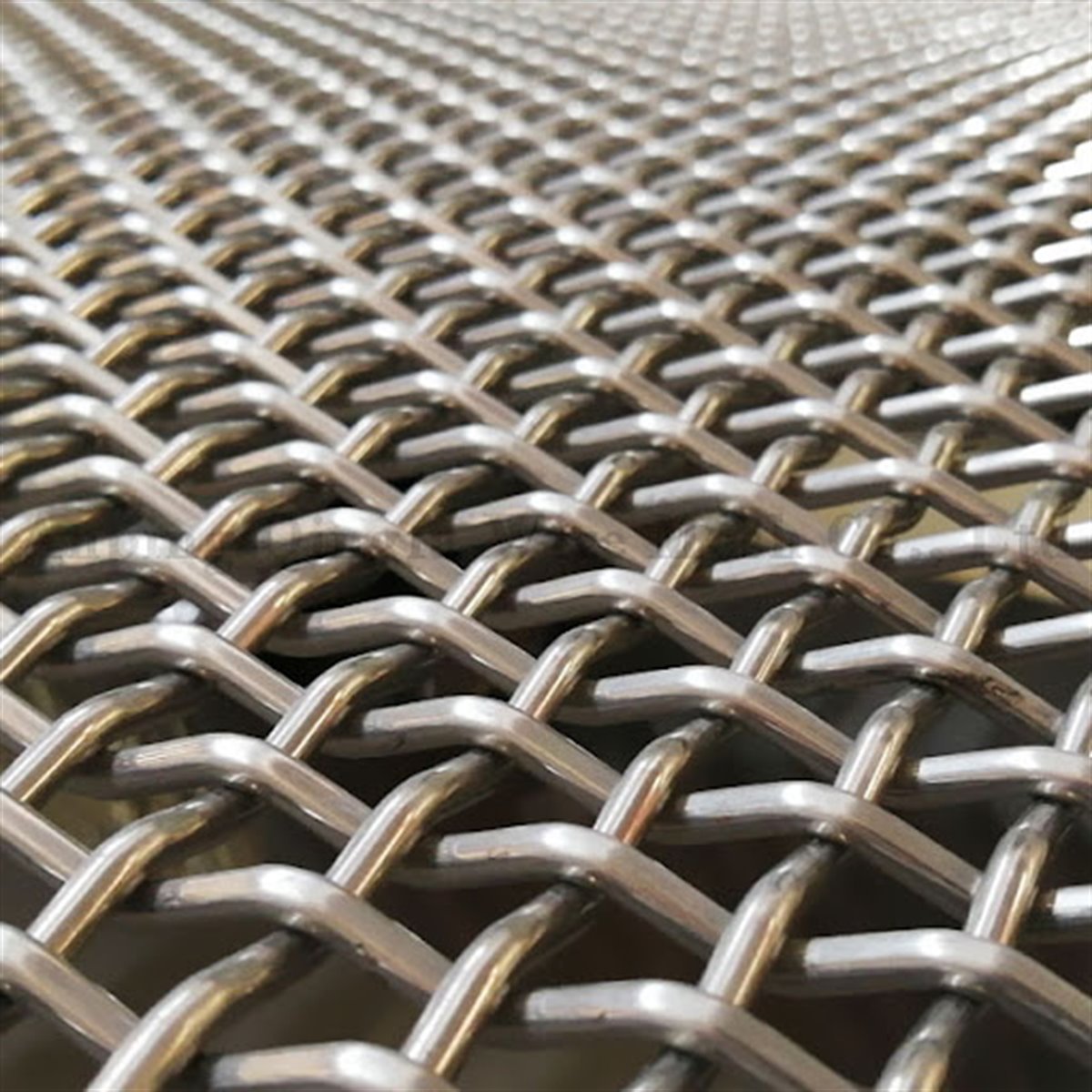
    Wires are crimped before weaving so the apertures lock in place under impact. Used for coarse scalping where a plain weave would distort.

  • C

    Hook & tension edge

    Panels supplied with welded hooks or reinforced edges so they tension onto the deck without reworking on site — replacement parts, not raw cloth.

Stainless steel woven screen mesh, pre-crimped weave Screen mesh · stainless, pre-crimped weave
Weave selection by duty
DutyStart with
Filtration & strainingFine plain weave, 316L, electropolished for clean-down; finer apertures quoted on request
Fine sizing 3–5 mmPlain weave, 316L for wet duty
5 – 20 mmPlain or pre-crimped, 10–20 mm aperture
20 – 60 mmLock crimp, 304 or 2205 wire
Guards & heavy dutyHeavy pre-crimped or flat-top, 50 mm and up, 304 heavy wire
Applications — filtration, guarding and screening duty
IndustryDutyMain challengeRecommended screen
Petrochemical & refiningCatalyst retention, packing support, line strainersFine aperture, corrosion, temperatureFine plain weave, 316L, electropolished
Polymer & fibre spinningMelt and spin-pack filtrationPressure, cleanliness, no fibre snagFine plain weave, 316L, electropolished, no loose wire
Water & wastewaterScreening, filter-media supportWet, biofoulingPlain weave 3–10 mm, 316L
Chemical & fertilizerSizing, screening, drying traysCorrosion, temperature316L plain weave, 310S for hot duty
Heavy industry & machine guardingPerimeter guards, walkways, enclosuresImpact, visibility, loadHeavy pre-crimped or flat-top 25–50 mm, 304 heavy wire
Quarry & aggregateCrushed stone sizing 5–40 mmWire wear, peggingPre-crimped lock crimp 10–40 mm, 304 or 2205
Sand & gravel washingClassification, dewateringBlinding on finesPlain weave 3–5 mm, 316L, hook edge
Mineral processing & C&DScalping, oversize removalHeavy impact, sharp shapesHeavy wire 5–8 mm, 316L or 2205 duplex
Selection & FAQ

The questions buyers actually ask

Short answers to the points that decide a mesh order — aperture, weave, stainless grade and what drives the price.

01Which aperture should I choose?

Start from the particle you need to pass, then add a margin: the aperture is normally set slightly above the target cut size, because wires reduce the effective opening as they wear in. Then choose a wire diameter that survives the duty — heavier wire for abrasive or impact-heavy feed, lighter wire where open area matters more than wear life.

02Is mesh count the same as aperture?

No. Mesh count is the number of wires per inch; aperture is the clear gap between them. 4 mesh with 1.0 mm wire and 4 mesh with 3.0 mm wire have the same count but very different openings. That is why we quote aperture and wire diameter together, and why a quote that only says "4 mesh" is not a specification.

03Can you match an existing panel or drawing?

Yes — send the panel dimensions, aperture, wire diameter, edge type and a photo or drawing. We quote against the existing part and flag anything ambiguous before production, so the replacement fits the deck or post without modification.

04Which stainless grade should I take?

304 for most indoor, food-area and general industrial work. 316L where chlorides, salt air, wash-down chemicals or coastal exposure are involved. 310S for hot duty and repeated temperature cycling; 2205 duplex where high load meets chloride and 316L would pit. Our mesh is stainless through the wire — nothing is plated, so there is no coating to chip at a cut edge.

05What drives the price?

Wire grade plus weight per square metre (wire diameter and aperture), then edge fabrication and packing. Stainless cost tracks nickel and molybdenum content, so 316L and 2205 sit above 304 — the grade decision is usually a bigger lever than the mesh size, which is why we ask for the grade and the environment before quoting.

Send us the drawing.

Quote within one working day. Samples available for approval before production.

1 dayQuote turnaround
SamplesBefore bulk run
FOB TianjinIncoterms on request
Start an Enquiry
Contact

Talk to the factory

Tell us the material, aperture, wire diameter, panel size and quantity. If you already have a drawing, mention it and we will reply with a format checklist.

CompanyANPING XIANGZHAN METAL WIRE MESH PRODUCTS CO., LTD
FactoryAnping County, Hengshui, Hebei, China
ResponseWithin 1 working day, English / Chinese

What to include in your enquiry

  1. Product — weld mesh rolls, panels or screen mesh
  2. Aperture & wire diameter — in mm or mesh count
  3. Panel or roll size — plus quantity, in pieces or containers
  4. Stainless grade — 304 / 316L / 310S / 2205, and the environment it works in
  5. Finish — mill as standard, electropolished on request
  6. Standard & destination — ASTM / EN / GB, port of discharge

A drawing or photo of an existing part is the fastest route — we will quote against it and flag any detail that needs clarifying.